
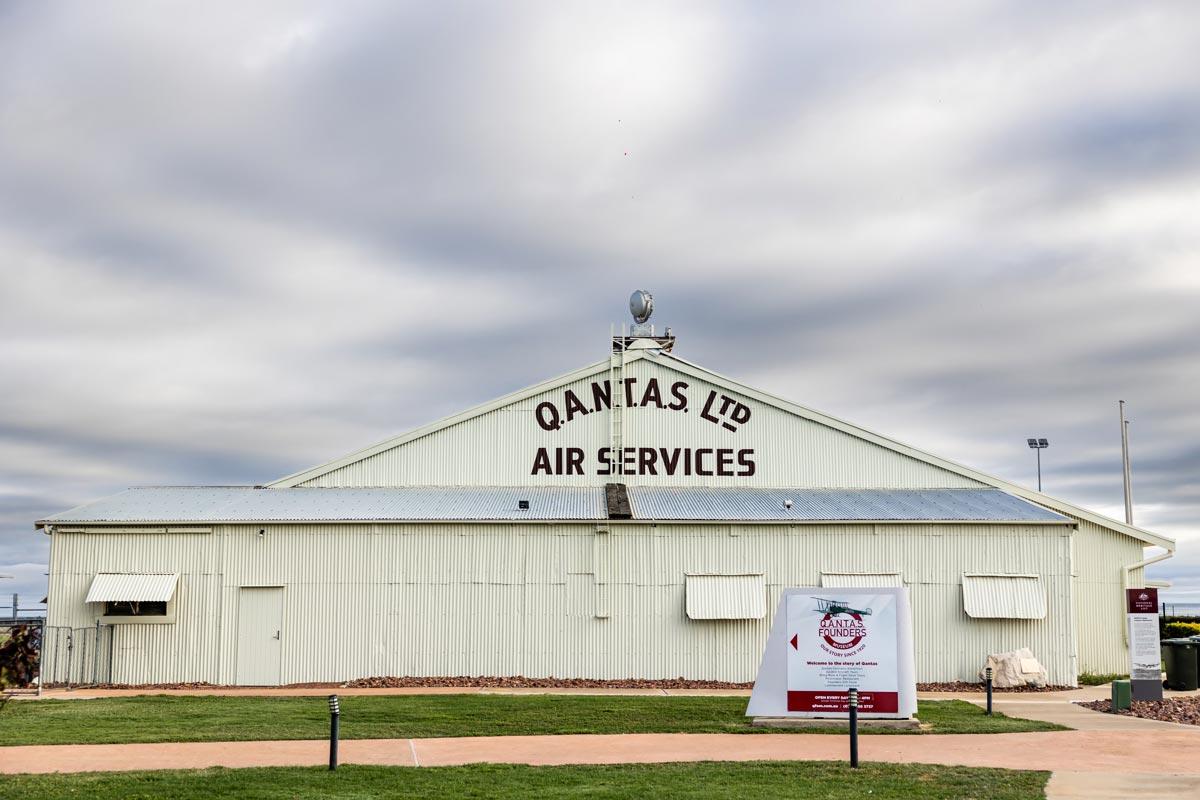
Qantas Foundation Memorial Ltd (QFM) is a Trustee Company responsible for the administration of the Qantas Foundation Memorial Trust. QFM is a not-for-profit registered charity comprised of an unlimited number of limited liability members (refer to “Become a Member” below). QFM was incorporated on 20 February, 1990, with the goal:
“To preserve the history and innovatively present the story of Qantas and its Founders.”
It operates the “Qantas Founders Museum”. While Museums preserve past heritage for the historical, educational and entertainment benefit of the community, within this Museum, displaying people, places and aeroplanes, and the re-creation of flight in this pioneer era of aviation, there is a theme for the present generations of Australians:
“To enthral and inspire all with the vision, determination and deeds of the Qantas Founders and those who have followed.”
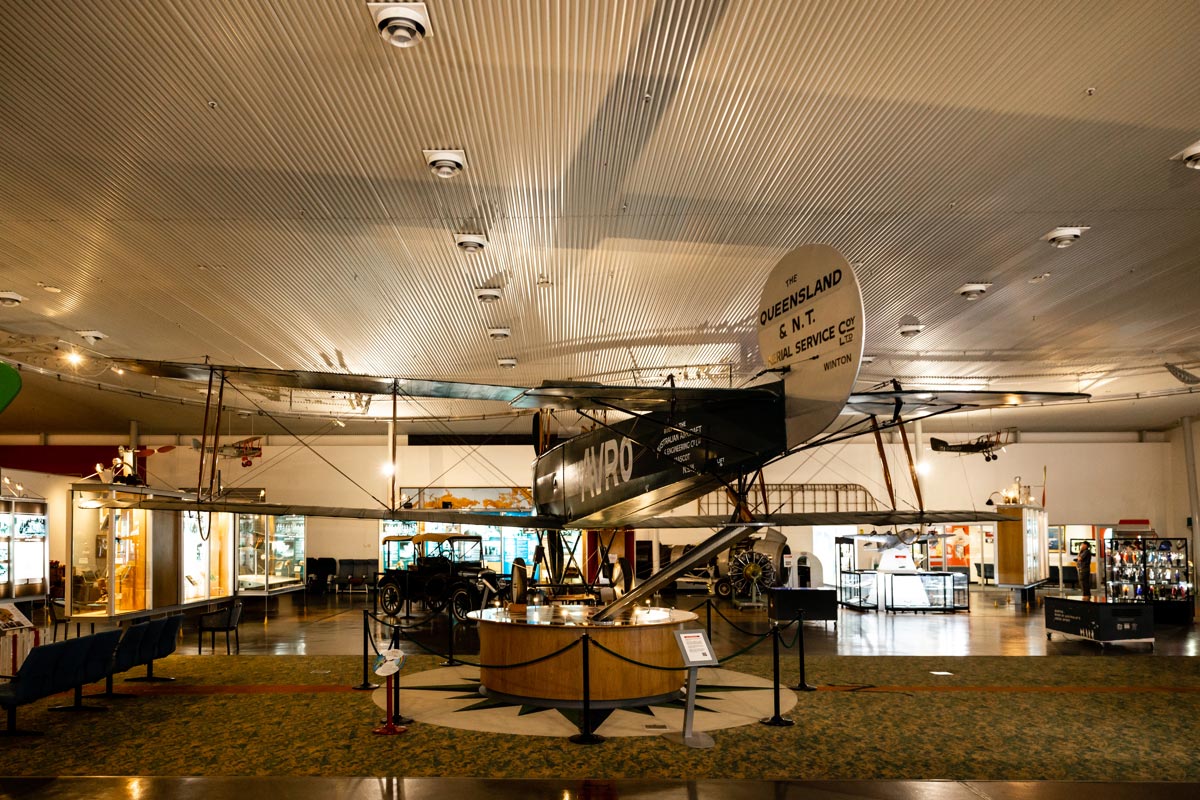
Qantas Founders Museum is the initiative of people of Western Queensland.
We are a separate and distinct entity from, and not owned or operated by, Qantas Airways Ltd but proudly independent having been initiated by the people of the region and receiving their ongoing support. We enjoy an excellent and close working relationship with Qantas and have an Intellectual Property Licensing Agreement and currently receive an annual donation from them. Qantas employees, past and present, continue to support us in a range of ways including through donations and substantial volunteer labour, information and advice. To read the Qantas Foundation Memorial Limited Constitution click Here.
Become a Member
As a Qantas Foundation Memorial Member you will receive free entry into the Qantas Founders Museum for the duration of the membership, invitations to special events and 10% discount on gift purchases (Excludes food / refreshments and consignment lines). If you would like to become a member, please click the button below to download the membership form
For more information you can call Qantas Founders Museum on 07 4658 3737 or email info@qfom.com.au.
Help Us Save Australia’s Aviation History
If you would like to help us save our aviation history you can donate online by clicking the Donate button below. Every dollar helps and donations over $2.00 are tax deductible. Thank you for supporting our museum!
Donate ONLINEBoard of Directors

KALAIR MCARTHUR
CHAIR
Kalair McArthur has a background in marketing and economic development with skills in grant-writing, project management, project due diligence, communication, risk analysis and political and stakeholder liaising. She is a previous Executive Officer of Regional Development Australia, Fitzroy and Central West where her role was to facilitate economic development opportunities across the region.
Kalair also operates her own business supporting projects in rural and remote areas.
Having completed the Australian Institute of Company Directors course, Kalair is a member of the Australian Institute of Company Directors.
Kalair has previously served on the Queensland Rural, Regional and Remote Women’s Network Board, holding the Communications Portfolio and has also served on the Capricornia Chamber of Commerce. This is not all though, she has advised multiple boards on a regular basis regarding project investments and project due diligence.
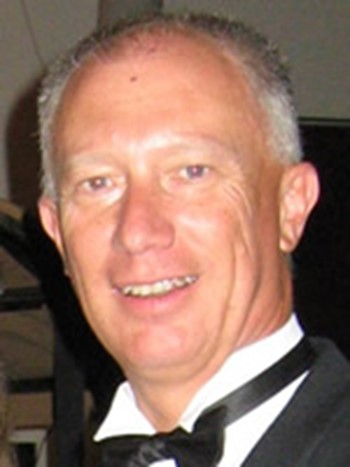
DON HILL
DEPUTY CHAIR & QANTAS APPOINTED DIRECTOR
Don Hill has been a career airline pilot since 1981, beginning as a First Officer on Fokker Friendships flying regional operations throughout Western Queensland. Don remembers parking in front of the now National Heritage Listed Qantas Hangar in Longreach in the early 1980’s and being fascinated by the aviation history it had seen.
In 1995 he was employed by Qantas as a pilot and is currently an A380 First Officer with a great passion for the heritage of the airline and its western Queensland routes.
Don has had a close association with the museum since 2008 when he organised, and led, the recreation drive in ‘Molly’ the Model T from Longreach to Darwin. The documentary of this re-enactment has since been broadcast and the re-enactment is available for guests to enjoy at the Museum. The DVD of the re-enactment can also be found in the Founders Store.
Don has been involved in several small museum projects including most recently the reclamation of aircraft parts from the Qantas Constellation aircraft abandoned in the Kuwaiti desert.

PETER O'REGAN
TREASURER
Peter is the senior partner in O’Regan & Partners, a Chartered Accountancy Practice providing professional services to regional and remote Queensland.
He commenced his career with Deloitte in Brisbane and later established O’Regan & Partners in Longreach in 1992, with the firm expanding in subsequent years to now have offices in Mount Isa, Winton, Emerald, Townsville, St George, and Brisbane, as well as a visiting office in Cloncurry.
Peter is a Chartered Accountant with extensive experience in the beef production sector, having been raised on a cattle property in the Marlborough district of Central Queensland, and worked on the family properties for a number of years before moving to Longreach.
In addition he also owned, operated, and developed two cattle and sheep properties South West of Longreach for a period of 12 years.
The agricultural sector is a significant part of the firm’s client base, ranging from large pastoral operations in Western Queensland to irrigated cropping operations in the Queensland Central Highlands.
With over 25 years experience in advising businesses, Peter offers expertise in business structures and taxation strategies, business growth and succession, as well as finance and restructuring.
In addition, Peter has significant expertise in Local Government, having for many years been a contract auditor with the Queensland Audit Office, with the firm now providing consulting and internal audit services to many local authorities in Western and South Western Queensland.

ANTHONY PENNEY
QANTAS APPOINTED DIRECTOR
Anthony is the Qantas Regional Manager for Queensland, Papua New Guinea and the Solomon Islands, responsible for commercial activity in the state, as well as, government, industry and tourism relations. He has considerable commercial experience, having led sales teams across the airline and has held management roles in customer experience, operational and learning and development areas.
Prior to Qantas, Anthony was the Executive Director, Industry & Government Engagement at Business SA, South Australia’s chamber of commerce.
Sitting on the leadership team he led Business SA’s policy and advocacy efforts lobbying state and federal politicians regarding key issues facing South Australian businesses. He was also the media spokesperson conducting over 1000 interviews with local, national and international media outlets over a 4-year period.
Anthony has a Bachelor of Sports Science and a Masters of International Business and has lectured in Management, Organisational Behaviour and Business Communication at universities in Perth and Sydney.Originally from Canada, he has lived and worked in Europe, Asia and Australia.

GRAEME WILLS
DIRECTOR
Graeme Wills lives in Barcaldine, Central Western Queensland, and has lived in central western Queensland since 1983. In July 2018, Graeme retired from his role as a partner with a local consulting engineering firm.
He has practiced as a Civil Engineer since graduating from the University of NSW in the late 1970’s. After graduating, he worked on the waterfront on Sydney Harbour assisting with the construction and maintenance of marine infrastructure. He then worked for several years in northwest NSW in irrigation development before moving to Barcaldine.
For over 35 years, Graeme’s work took him over the vast expanses of inland Queensland where he provided many clients with the design, project management, construction and maintenance of critical infrastructure. He held a private pilot’s license which enabled him to work from Burketown in the north to Birdsville in the southwest and Blackwater in the east.
Having been born and raised on the far south coast of NSW, Graeme is passionate about rural regions. Graeme was elected to the QFM Board of Directors at the QFM Annual General Meeting in November 2014. He severed as the Deputy Chairman of the QFM Board of Directors from May 2017 to June 2021.
Graeme believes there must be a sustainable future for rural Australia based around a diverse range of industries. He also feels central and western Queensland offer a unique, safe and rewarding lifestyle for those who make this region their home. He is a strong advocator that QFM and similar tourist attractions in the central west will help strengthen and diversify the region thus making it an even more attractive area in which to live and to holiday.

DAVID MILES
DIRECTOR
David Miles is the eldest Son of Wendy Miles (nee Fysh), daughter of Sir Hudson Fysh. As the eldest grandson, David developed a special relationship and shared a common love of the Australian bush with Sir Hudson. Some of his happiest childhood memories involved trout fishing trips down to the Snowy Mountains and visits to Sir Hudson’s farm at Dural in NSW.
David trained as a Chartered Accountant and spent 13 years working in Toronto and Sydney with Price Waterhouse before joining JPMorgan where he spent a total of 16 years in roles which included Finance Director in Sydney and Jakarta, CEO of Chase Trust Bank in Tokyo, CEO of Austrapay Ltd (a Joint Venture between JPMorgan and Australia Post) and COO of JPMorgan Investment bank based in Sydney.
In the latter part of his career, David helped setup Moelis and Company in Australia, acting as COO for the new investment banking startup, now an $800million company listed on the ASX.
David now runs a small Angus cattle breeding operation on the Fish River at Duckmaloi, 3 hours West of Sydney. He is also Director and Treasurer of Australian Doctors International, a not for profit which provides volunteer medical aid to the people of Papua New Guinea.David has a keen interest in the history of QANTAS and in respecting and preserving the legacy of the Founders.

DARREN MOOR
DIRECTOR
Darren Moor joined the Board in 2022 bringing further corporate governance, risk management, organisational development and leadership skills.
Darren has been a regionally based Senior Executive with the Queensland Government for over 10 years where he continues to work with communities, companies, landholders and stakeholders to shape, advocate for and resolve large scale and complex mining, petroleum and natural resource challenges.
He describes himself as being consciously biased for regional Queensland while others say he is a leader of people, strategic and loves to tell a story to make his point.
This role provides him with opportunities to engage with communities across Queensland and as such he understands the value of having world class tourism attractions in regional Queensland and the special place that Qantas holds in the hearts of those who live there.

ALASTAIR FYSH
DIRECTOR
Alastair has a background in media and film production. He has worked at leading creative and media agencies in both London and Sydney. He was previously Head of Media & Sponsorship for McDonalds Australia.
Alastair then became General Manager of Sales at oOh Media, Australia’s leading outdoor media advertising company, and oversaw an Australia wide team which delivered significant and sustainable revenue growth.
More recently Alastair started his own video production business producing TV commercials for companies such as CommBank, Glenfiddich, Bayer and New Holland Tractors.
Alastair’s experience and expertise will assist QFM with advice on marketing & media, including digital video production, and with corporate fund raising.Alastair is passionate about Qantas and its history.
Qantas has always been part of his life. His Grandfather was Sir Hudson Fysh, one of the founders, Managing Director and finally Chairman until his retirement in 1966 (46 years). Alastair’s father John Fysh was born in Longreach and was also with Qantas as a senior Executive for 33 years.Alastair lives in Sydney with his wife Pippa and has 3 adult children.

DAVID THIESS
DIRECTOR
David’s family have been associated with outback QLD since the 1930’s and David has been with Qantas since the age of 16. Employed initially as an Aircraft Engineer Apprentice (Mechanical).
After attaining his pilot licence in his mid-20s, he started his flying career with Qantas. David has flown 747-2/300/SP, B737-3/4/800, B767, A380 and just recently gained his command on the A330.Interesting fact: David actually flew VH-EBQ with its brand new paint job from New Iberia Louisiana USA to Australia. It makes him very proud to see it at Longreach today.
David gained his LAME licence and owns a CASA approved workshop where he restores and maintains many vintage aircraft from the 1920s to 1940’s. He regularly flies a DH82 Tigermoth and DH83 Foxmoth. David is a committee member of the Antique Aircraft Association of Australia. David helped organise a successful aircraft pilgrimage for the RFDS to celebrate their 90th Birthday. Where they flew 30 aircraft on the very first flight route 90 years to the day Cloncurry to Julia Creek.
David has a passion for aviation history including QANTAS history. David is excited to be associated with QFM and continue the great legacy that Qantas and the museum have become world renowned for.

JOANNE KHOO
DIRECTOR
Joanne Khoo GAICD, GIA (Affliate) BA//LLB and Masters of Law, is an experienced C-Suite legal, risk and governance executive and NED with 18+ years of combined professional experience working at former ASX listed Sydney Airport (Australia’s busiest gateway) and regional Cairns Airport and Mackay Airport, where she was the immediate past, General Counsel and Company Secretary and played a key role in helping to drive the success of the airport business and contributing to the broader socio-economic prosperity of the local economy.
Joanne also brings diverse industry experience from her time working in the professional services/consulting sector as senior legal advisor at the leading design/engineering firm, Arup Pty Ltd and as a senior lawyer at Australia’s top national law firms, in Sydney.
Joanne is a current NED on the board of the Ngak Min Health (since 2022- present) which is part of the Cape York Partnership entity group. Ngak Min Health strives to provide holistic and preventative health care services to first nations students and their families at Djarragun College in Gordonvale, Cairns.